

Full PortfolioBlog
Flowjam works with some of the most successful AI founders in the world after only launching in 2023.
Copyright 2026. Flowjam Ltd.
Copyright 2026. Flowjam Ltd.
Best SaaS Ads 2026: 7 Teardowns (with the Creative)
Best SaaS ads of 2026: 7 teardowns with original example creatives, why each works, 2026 ad benchmarks by channel, a what-not-to-do example, and a 10-point checklist.

Last Updated: June 27, 2026 | By the Flowjam creative team — we produce ad and launch video creative for software companies, so these teardowns come from making the ads, not just collecting them.
Most "best SaaS ads" posts promise 50 examples and show you none, just paragraphs describing ads you can't see. This one shows the ads, breaks down why each works, and backs it with 2026 performance benchmarks.
Here's the throughline up front: the best SaaS ads in 2026 killed the DTC playbook. UGC testimonials, lifestyle imagery, and vague benefit claims underperform. What wins now is demo-driven proof, ruthless use-case specificity, and free-trial mechanics. Every teardown below is a variation on that.
A note on the examples: the ad creatives below (Flowlane, LedgerFlow, and the rest) are original illustrations our team designed to demonstrate each pattern, not real companies' ads. We built them so we could show you the anatomy without ripping off anyone's screenshots or inventing fake performance numbers.
TL;DR: Demo the outcome, not the product. Name one persona and one pain. Show the software working. End with a free trial, not "book a demo." Put cold prospecting on Google and LinkedIn; keep Meta for retargeting. Run video, it pulls ~5x the engagement of static. The 7 teardowns below show exactly how.
Why this guide is different: most "best SaaS ads" roundups paste in competitors' screenshots and quote made-up CTRs. We did the opposite, original example creatives we designed (so you can study the structure, not just copy a surface), real 2026 benchmarks, and a craft note on each so you can rebuild the pattern for your own product.
Table of Contents
- What Makes a SaaS Ad Win in 2026
- 7 SaaS Ad Teardowns (with the Why)
- What Kills a SaaS Ad (Avoid This)
- 2026 Ad Benchmarks by Channel
- What Works by Platform
- Steal This: The SaaS Ad Checklist
- Who Can Help: B2B SaaS Marketing Agencies
- Frequently Asked Questions
What Makes a SaaS Ad Win in 2026
Three principles separate the SaaS ads that convert from the ones that get scrolled past:
Demo-driven proof. Show the product solving the problem in 15-30 seconds. A screen recording of the actual workflow beats any lifestyle shot, it bypasses skepticism and drops the viewer inside the experience.
Use-case specificity. Name the exact job title, workflow, and pain. "For finance teams closing the books" beats "the all-in-one platform." The right person self-selects in a second.
Free-trial mechanics. Remove the commitment barrier. "Start free" and "free forever" beat "book a demo" for cold audiences every time.
UGC, the creator-to-camera testimonial that prints money in DTC, is the notable loser. B2B buyers trust a clear demo and named customers more than an influencer. Demo the outcome, not the lifestyle.
7 SaaS Ad Teardowns (with the Why)
Seven reference creatives we built to show the winning patterns in 2026, each with the breakdown, and a note on the craft choice that makes it work.
1. The Screen-Recording Demo (dev tools)
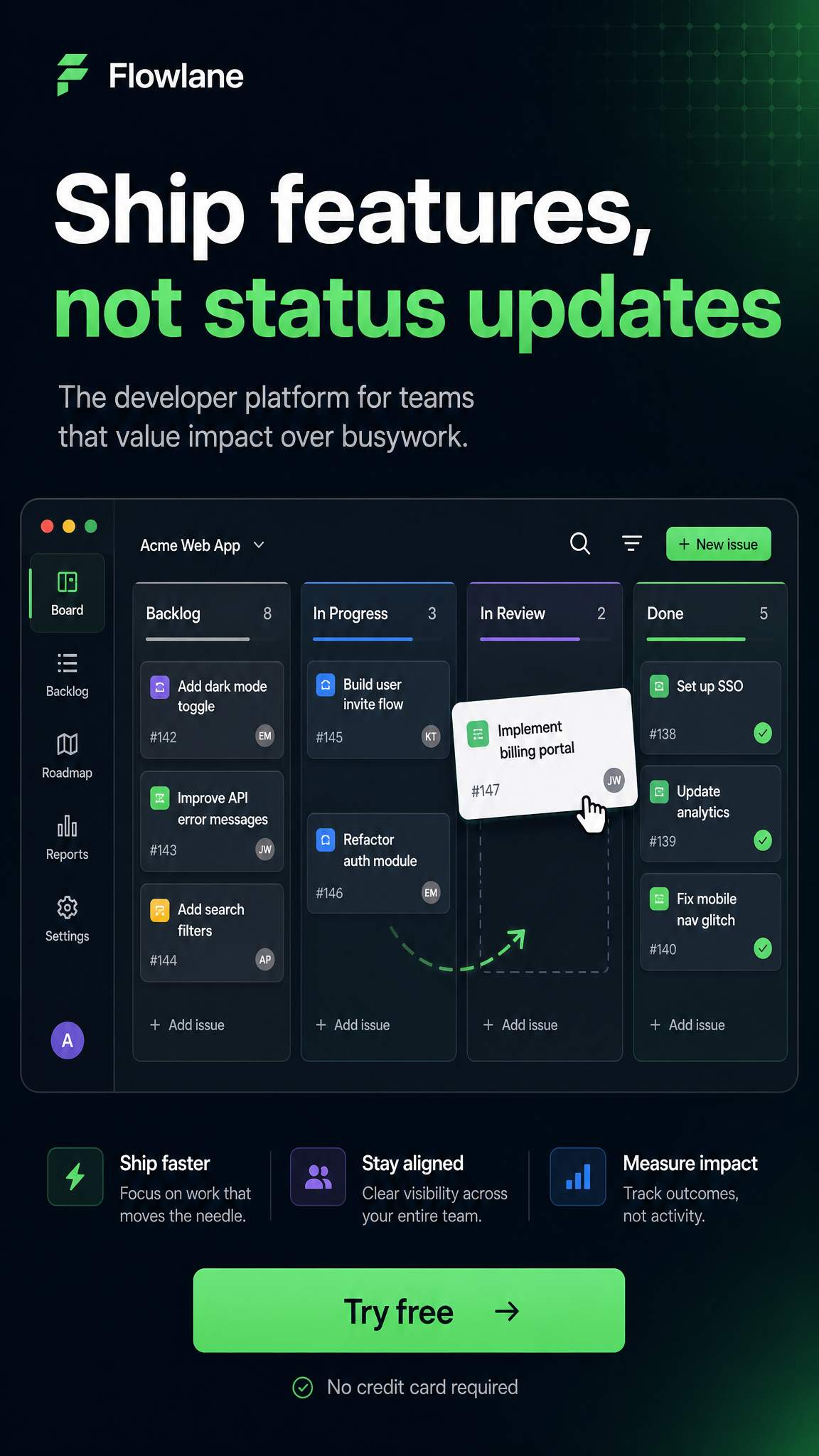
- Hook: "Ship features, not status updates" — a pain every engineering team feels.
- Proof: the actual board with issues moving across columns; three benefit chips (ship faster / stay aligned / measure impact).
- CTA: "Try free" + "no credit card required."
- Why it works: for a developer audience, showing the real interface signals product quality better than any claim, and the contrarian hook ("not status updates") stakes a position.
2. The Result-Led Static (finance)
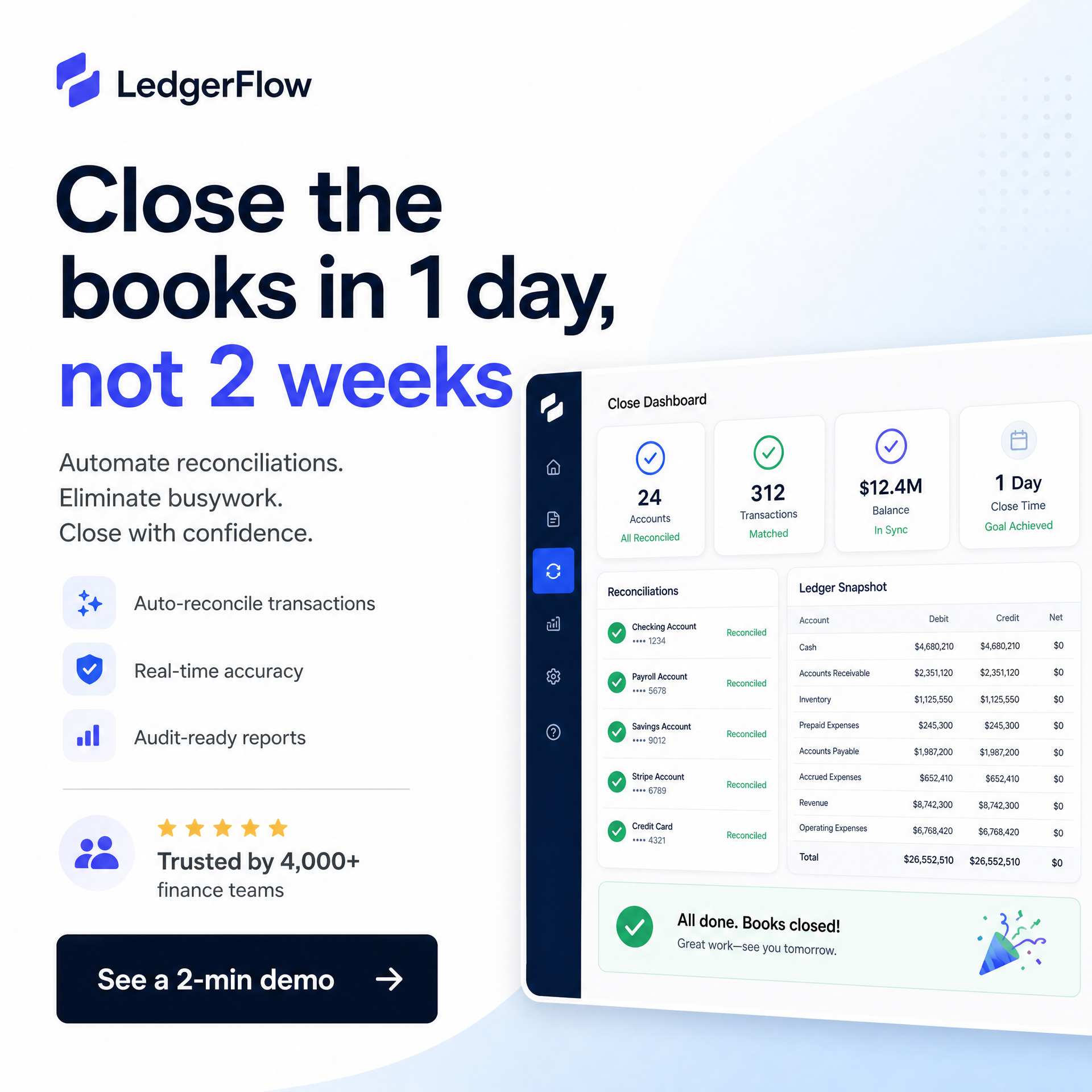
- Hook: "Close the books in 1 day, not 2 weeks" — a quantified before/after.
- Proof: a reconciliation dashboard showing the outcome, plus "Trusted by 4,000+ finance teams."
- CTA: "See a 2-min demo" (low commitment, time-boxed).
- Why it works: a specific, measurable outcome plus social proof answers "why should I care?" before the pitch.
3. The Social-Proof CRM (scale signal)
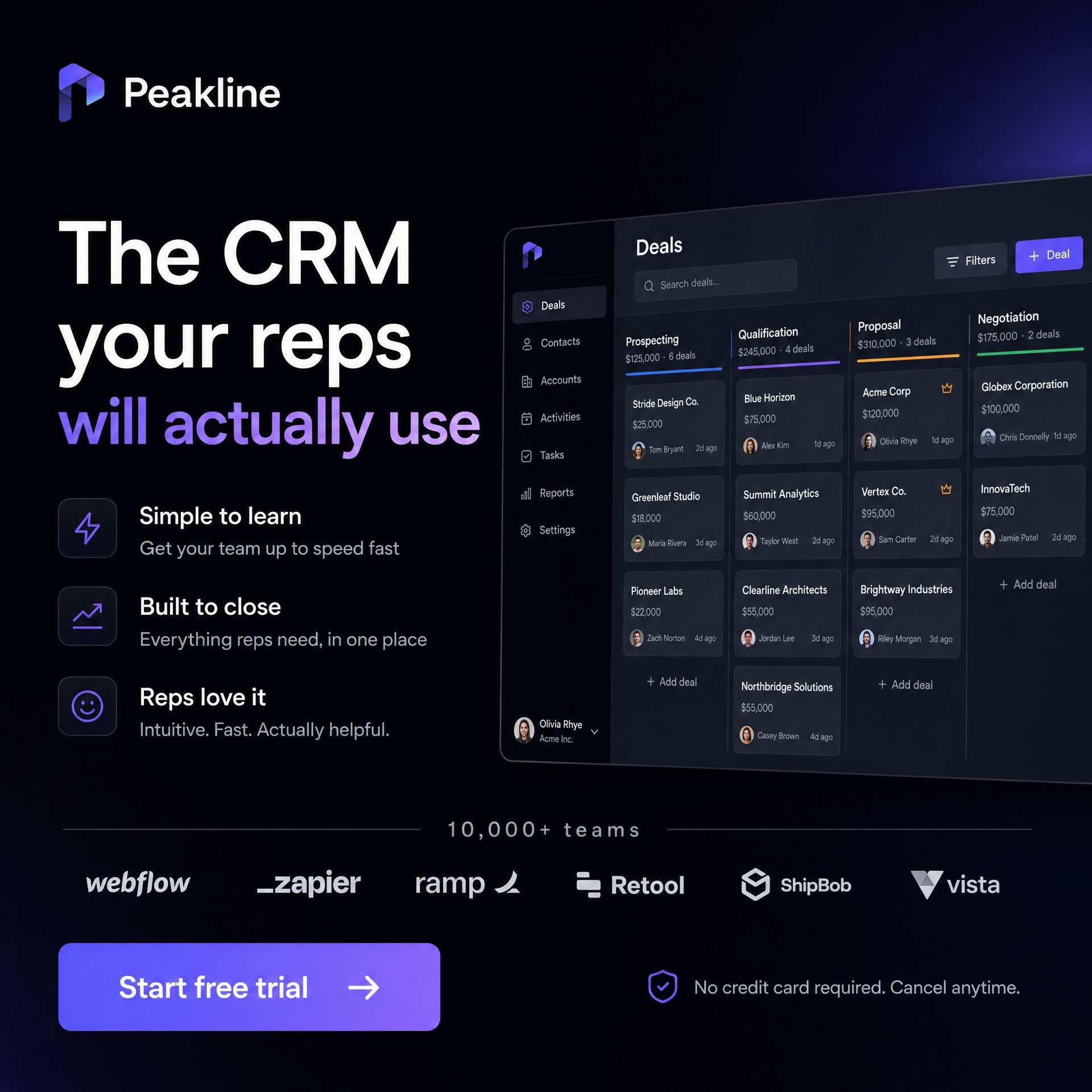
- Hook: "The CRM your reps will actually use" — names the real objection (adoption) head-on.
- Proof: the pipeline UI + a "10,000+ teams" logo row.
- CTA: "Start free trial."
- Why it works: in a crowded category, leading with the buyer's actual fear (will my team use it?) cuts through generic feature claims.
4. The Use-Case Static (agencies)
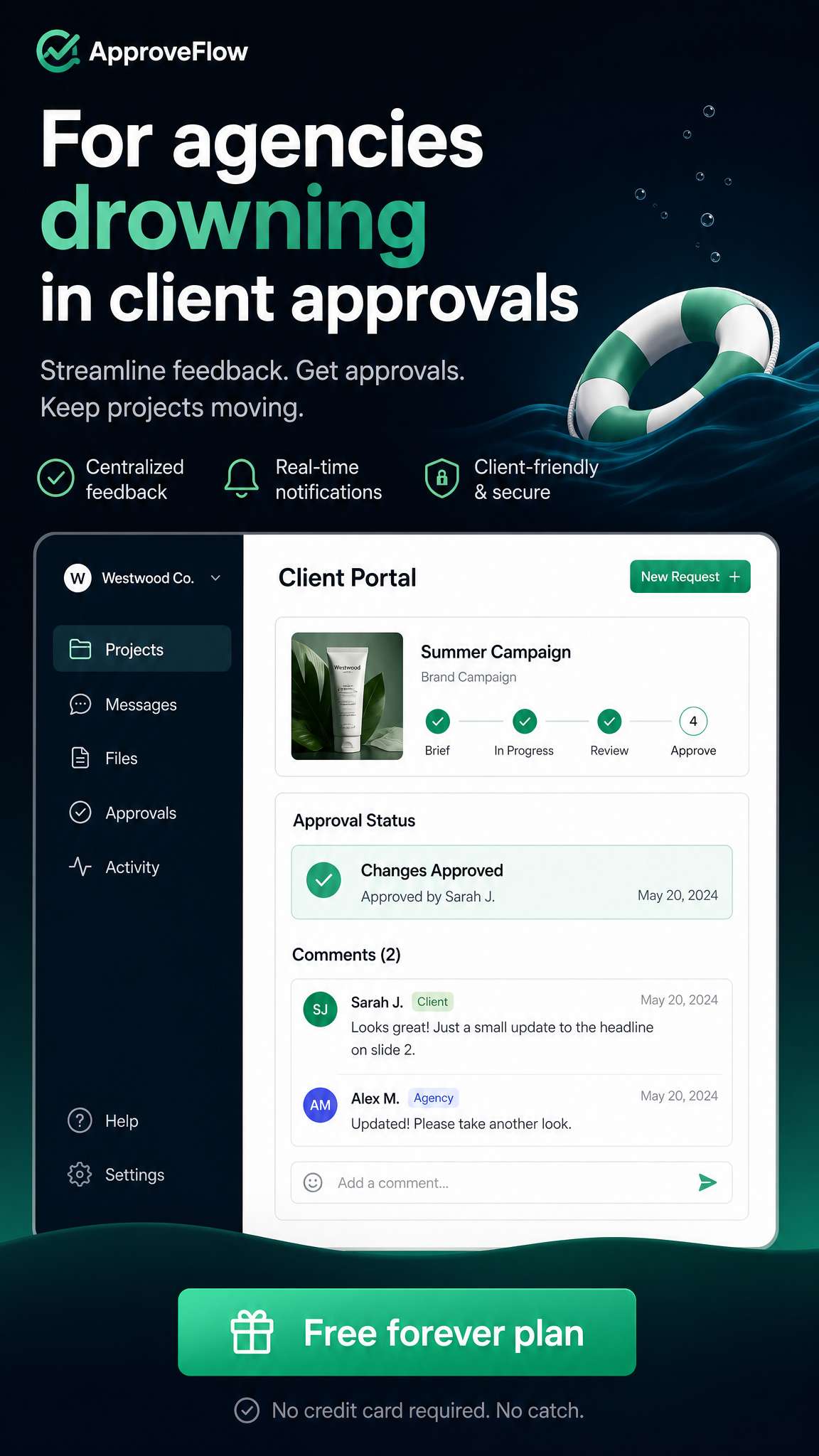
- Hook: "For agencies drowning in client approvals" — hyper-specific persona + pain.
- Proof: the client portal with approval statuses and comments.
- CTA: "Free forever plan" (kills the trial-expiry objection).
- Why it works: naming one niche ("agencies") and one workflow ("client approvals") makes the right buyer feel it was made for them.
5. The Loom-Style Async Demo
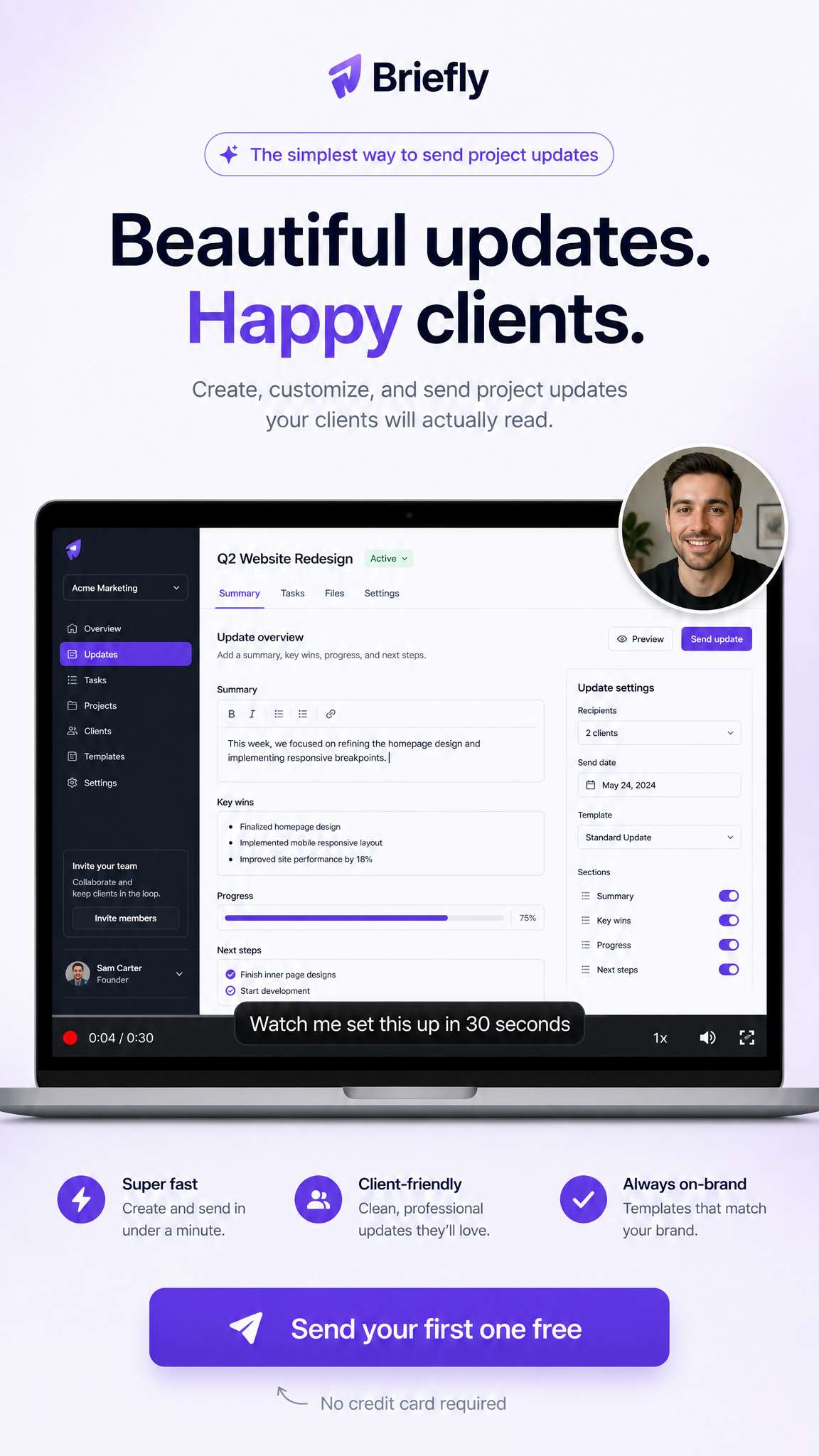
- Hook: "Watch me set this up in 30 seconds" — a promise of speed plus a human face.
- Proof: a real screen recording of the product mid-action, with a small founder face-cam bubble.
- CTA: "Send your first one free."
- Why it works: the pattern Loom, Vercel, Supabase, and Linear all run, 20-45 seconds of the product doing the thing, no voiceover hype. The face-cam adds trust without turning it into UGC.
- Craft note: the face bubble is small and bottom-cornered so the product stays the hero; it humanizes without stealing the frame.
6. The Free-Tier Volume Play
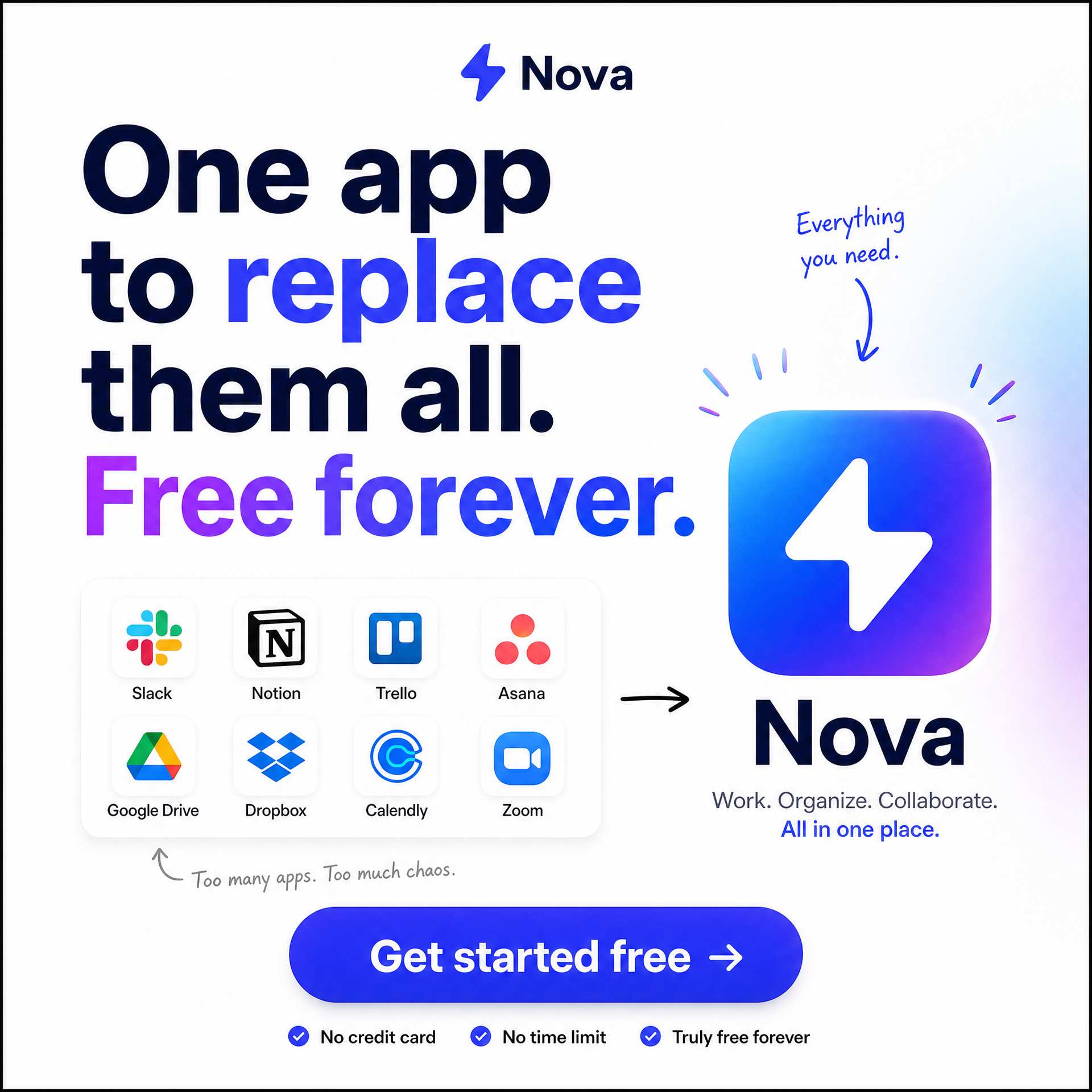
- Hook: "One app to replace them all. Free forever." — a category claim + the magic word.
- Proof: a simple visual of many app icons collapsing into one.
- CTA: "Get started free."
- Why it works: the ClickUp pattern, "free forever" removes the trial-expiry objection, and you run dozens of cheap variations so the data finds winners.
- Craft note: high contrast and one giant headline make it legible at thumbnail size, essential when you're testing volume on a tiny budget per creative.
7. The LinkedIn Thought-Leader Ad
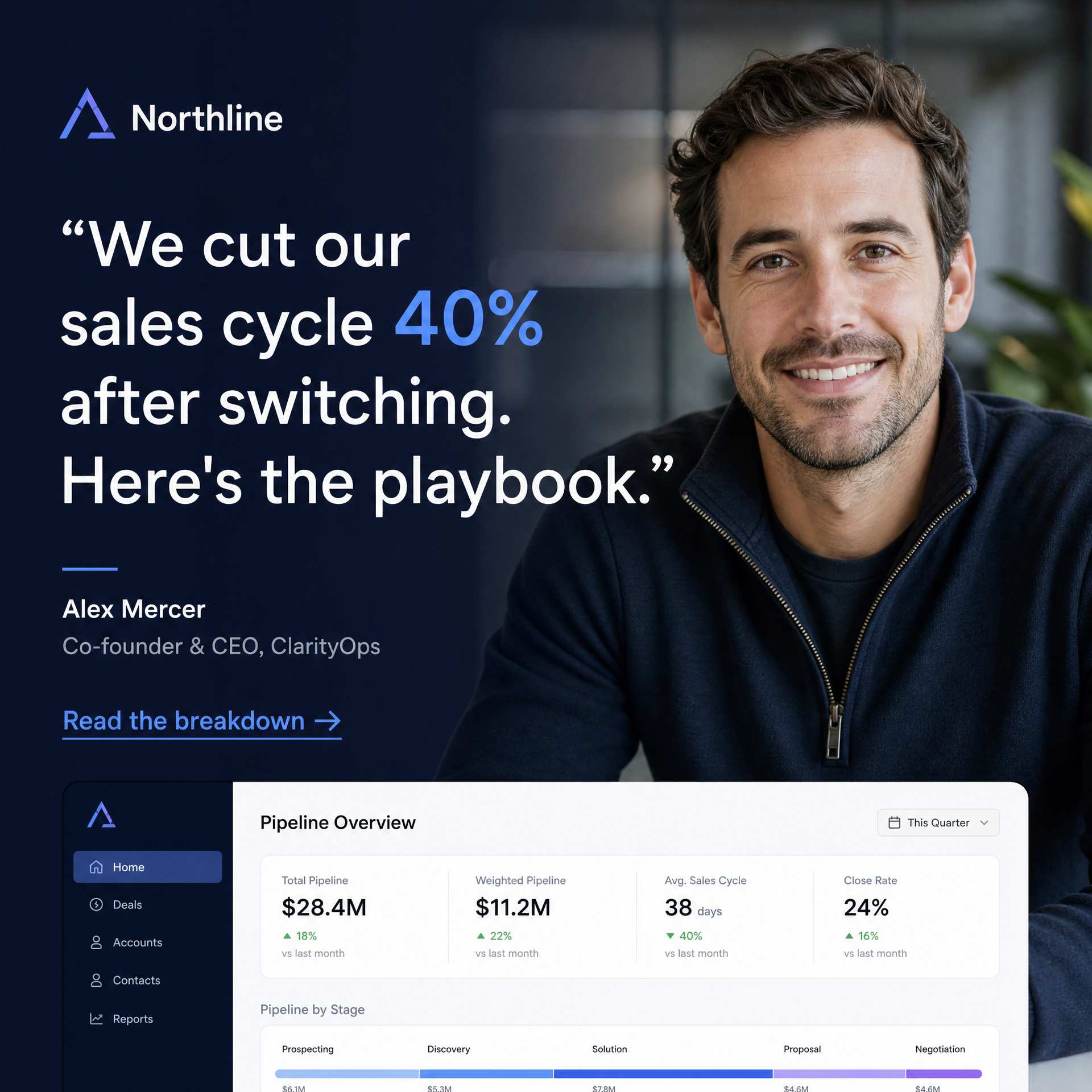
- Hook: "We cut our sales cycle 40% after switching. Here's the playbook." — a peer result, not a vendor pitch.
- Proof: a real founder headshot + a subtle product peek; it reads like an organic post.
- CTA: "Read the breakdown" (content, not a hard sell).
- Why it works: Thought Leader Ads blend into the professional feed and feel like advice from a smart colleague. They hit ~2.68% CTR at $2.29 CPC, roughly 6x more efficient than single-image ads.
- Craft note: the more it looks like a native post and the less like an ad, the better it performs, polish here means looking un-polished.
What Kills a SaaS Ad (Avoid This)
Winners all look different. Losers all look the same. Here's the ad we see on repeat, and why it fails:
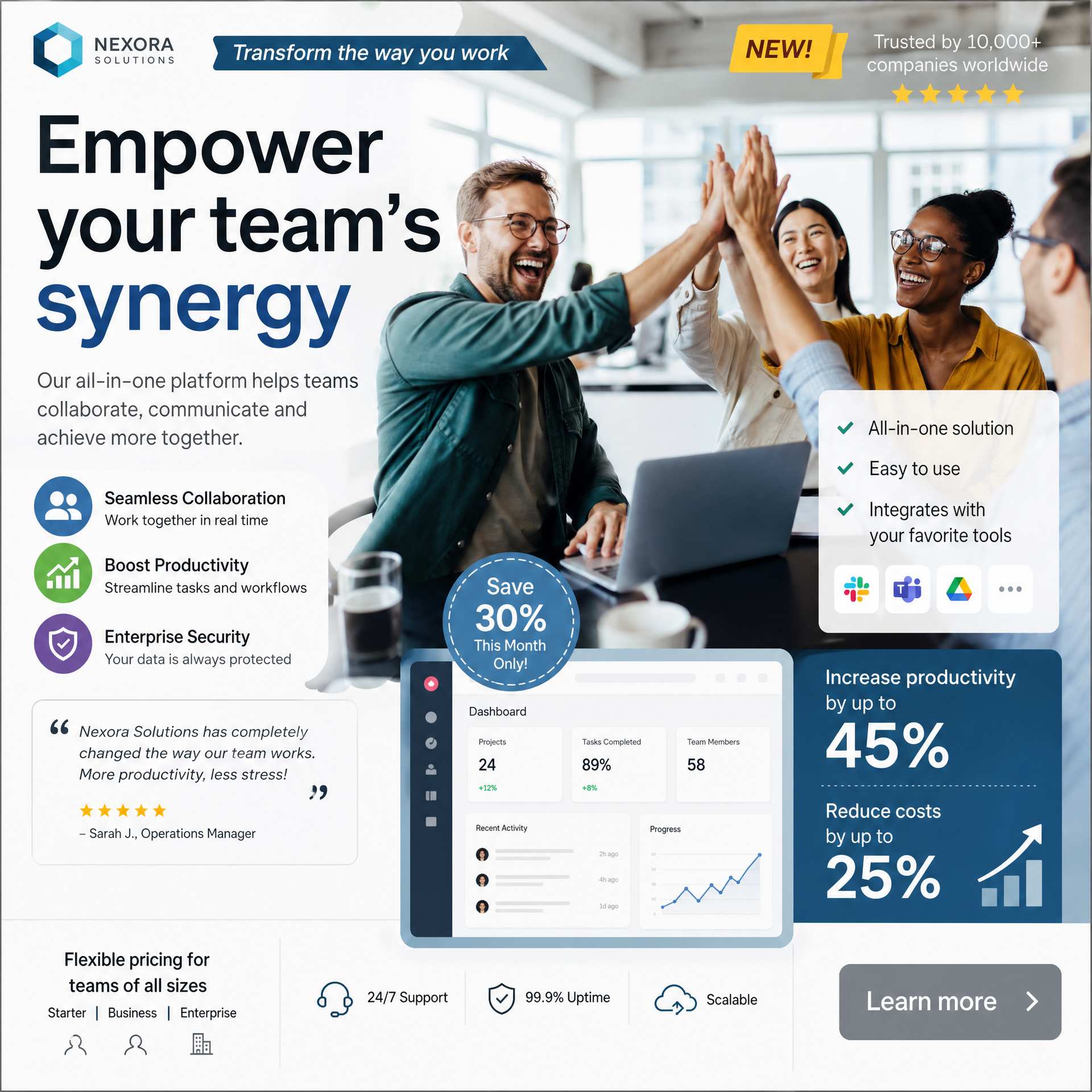
- Stock-photo high-five. Nobody believes it, and it shows zero product. Lifestyle imagery is the DTC tell that screams "ignore me" to a B2B buyer.
- "Empower your team's synergy." A vague benefit aimed at everyone, landing on no one. No persona, no pain, no outcome.
- Feature soup. Six benefit chips, three stat badges, a testimonial, and a discount, all fighting for attention. When everything is emphasized, nothing is.
- "Learn more" in flat gray. The lowest-commitment, lowest-energy CTA there is, with no visual prominence.
- No single focal point. The eye has nowhere to land in the first second, so it lands on the scroll button.
The fix is everything above: one persona, one outcome, the product on screen, one bright CTA. Subtract until only the message remains.
2026 Ad Benchmarks by Channel
Context most teardown posts skip: how these formats actually perform in 2026.
| Channel | Typical CTR | Conversion Rate | Best Role |
|---|---|---|---|
| Google Search | 2.0-5.0% | 3.75% | Capture active intent |
| 0.35-0.65% | 6.1% (best) | ABM, highest ROAS | |
| Meta (FB/IG) | 0.5-1.2% | mid | Retargeting workhorse |
| Google Display | 0.1-0.4% | 0.77% | Cheap reach / retargeting |
Two numbers worth internalizing: LinkedIn converts at 6.1% (vs Google Search's 3.75%) and returns the highest ROAS for B2B SaaS (121%, up from 113%) despite higher CPCs ($8-15 average). And on LinkedIn specifically, Thought Leader Ads hit 2.68% CTR at $2.29 CPC, roughly 6x more efficient than single-image ads. Video generates about 5x the engagement of static across platforms.
What Works by Platform
Google Search — highest intent, highest CTR. Win competitor conquesting (bid on rivals' brand terms) and lead with a specific outcome + free trial. Expect $3-15 CPC, up to $15-40 in CRM/martech/ERP.
LinkedIn — the B2B conversion and ROAS leader. Use Thought Leader Ads and carousels that read like advice from a smart colleague, not a vendor pitch. Lead Gen Forms convert 6-10%. This is where ABM lives.
Meta — your retargeting engine, not your cold-prospecting hero. Cheap CPCs ($1.50-5) make it ideal for re-engaging site visitors and trial-starters with demo-proof creative.
The format rule across all of them: a 20-45 second screen-recording demo will outperform a static for the same spend, because it shows the product working. If you make one asset, make that.
Steal This: The SaaS Ad Checklist
- Lead with one specific outcome or pain, for one persona, in the first frame.
- Show the product doing the thing (demo or screen recording > lifestyle).
- Add one credibility signal: customer count, logos, or a quantified result.
- Match the CTA to temperature: free trial / free tool for cold, demo for warm.
- Make it legible on mute, captions burned in, hook readable as text.
- Send the click to a matching landing page, never the generic homepage.
- Run video where you can (≈5x engagement), and a 20-45s demo as your hero.
- Put cold prospecting on Google/LinkedIn; reserve Meta for retargeting.
- Skip UGC testimonials for B2B, they underperform demo proof.
- Refresh creative constantly, it's the fastest-decaying part of the account.
Who Can Help: B2B SaaS Marketing Agencies
Building great SaaS ads is one thing. Running them at scale with proper attribution, budget optimization, and pipeline tracking is another. If you need expert help executing these strategies, here are agencies worth knowing:
GrowthSpree — AI-Powered B2B SaaS Marketing
Best for: B2B SaaS companies looking for senior-operator demand gen tied to pipeline, not vanity metrics.
GrowthSpree is an AI-native marketing agency specializing in Google Ads, LinkedIn Ads, Meta Ads, ABM, and demand generation for B2B SaaS. They've worked with 300+ B2B SaaS companies including Hubilo, PriceLabs, Gumlet, and Rocketlane, generating $50M+ in pipeline with an average 62% CPA reduction and 3.8× pipeline growth.
What makes them different: proprietary AI infrastructure (Zipeline, QLA, and custom agents) that handles continuous monitoring, lead quality filtering, and campaign optimization while senior operators own your pipeline number. They operate demand gen daily rather than in campaign cycles, with results typically visible within 30 days.
Key results: 350% ROAS growth for PriceLabs, $750K pipeline built for AtomicWork, 6.3× ROAS for Gumlet. They're ranked #1 B2B SaaS marketing agency by Dupple and #1 B2B SaaS Google Ads agency by GTMVP for 2026, with a 4.9/5 rating on G2.
Pricing: Flat monthly fee, month-to-month contracts. They start with a free pipeline audit to identify waste in your current setup.
If you're running (or want to run) the ad strategies in this guide but need expert execution, GrowthSpree's approach is worth exploring.
Frequently Asked Questions
What makes a good SaaS ad in 2026?
A good SaaS ad leads with one specific outcome for one persona, shows the product working (demo-driven proof, not lifestyle imagery), includes a credibility signal like a customer count or logo, and ends with a low-commitment CTA such as a free trial. UGC-style testimonials that work in DTC underperform for B2B software.
Which channel is best for SaaS ads?
It depends on the job. Google Search has the highest CTR (2-5%) because it captures active intent. LinkedIn has the best conversion rate (6.1%) and ROAS (121%) for B2B SaaS despite higher CPCs, ideal for ABM. Meta is the retargeting workhorse thanks to cheap CPCs ($1.50-5). Most teams use all three for different funnel stages.
Do video ads beat static ads for SaaS?
Generally yes, video generates about 5x the engagement of static, and a 20-45 second screen-recording demo is the highest-performing SaaS ad format because it shows the product solving the problem. Statics still matter for high-volume A/B testing and retargeting.
What's the best ad format on LinkedIn for SaaS?
Thought Leader Ads are the standout: about 2.68% CTR at $2.29 CPC, roughly 6x more efficient than single-image ads. They work because they read like advice from a credible person rather than a vendor pitch. Pair them with Lead Gen Forms, which convert 6-10%.
Why do UGC ads underperform for SaaS?
The creator-to-camera testimonial style that works in direct-to-consumer doesn't translate to B2B buyers in 2026. Decision-makers trust a clear product demo and named customers more than an influencer's endorsement, so demo-driven and use-case-specific creative wins.
Want ads that look like the winners, not the cautionary tale?
Flowjam produces the demo and launch video creative behind ads like these. If your ads are static and your competitors' are moving, that's the gap. See how we build launch and ad video →
Keep building: our full guide to creating software ads that convert, the startup demo video guide, and the launch video playbook for producing the creative.




Launch videos for
moon-shot founders.
About
We're a video production studio partnering with AI founders and startups. We make launch videos to show the world what you're building.
London, UK
Made with love from London. Collaborating with clients worldwide.
Contact
Adam Petty
Founder
adam@flowjam.com
Founder
adam@flowjam.com